
October 3, 2026 · 1 min read
Plato Vs Xenophon
Every summary of someone else's lived experience is ultimately a translation, and it can be best, better, good, bad, worse, or worst when compared with other summaries of the same subject.
Bertrand Russell said this about Xenophon's accounts of Socratic truths: "A stupid man's report of what a clever man says can never be accurate, because he unconsciously translates what he hears into something he can understand."
Xenophon was a soldier and a practical man. His Socrates comes across as a sensible uncle giving sound advice about farming and household management.
Plato's Socrates is brilliant, dazzling and radical, the kind of man Athens would put on trial. Further, Plato's genius also compelled him to slip his own ideas into his teacher's mouth. (case in point: Theory of Forms)
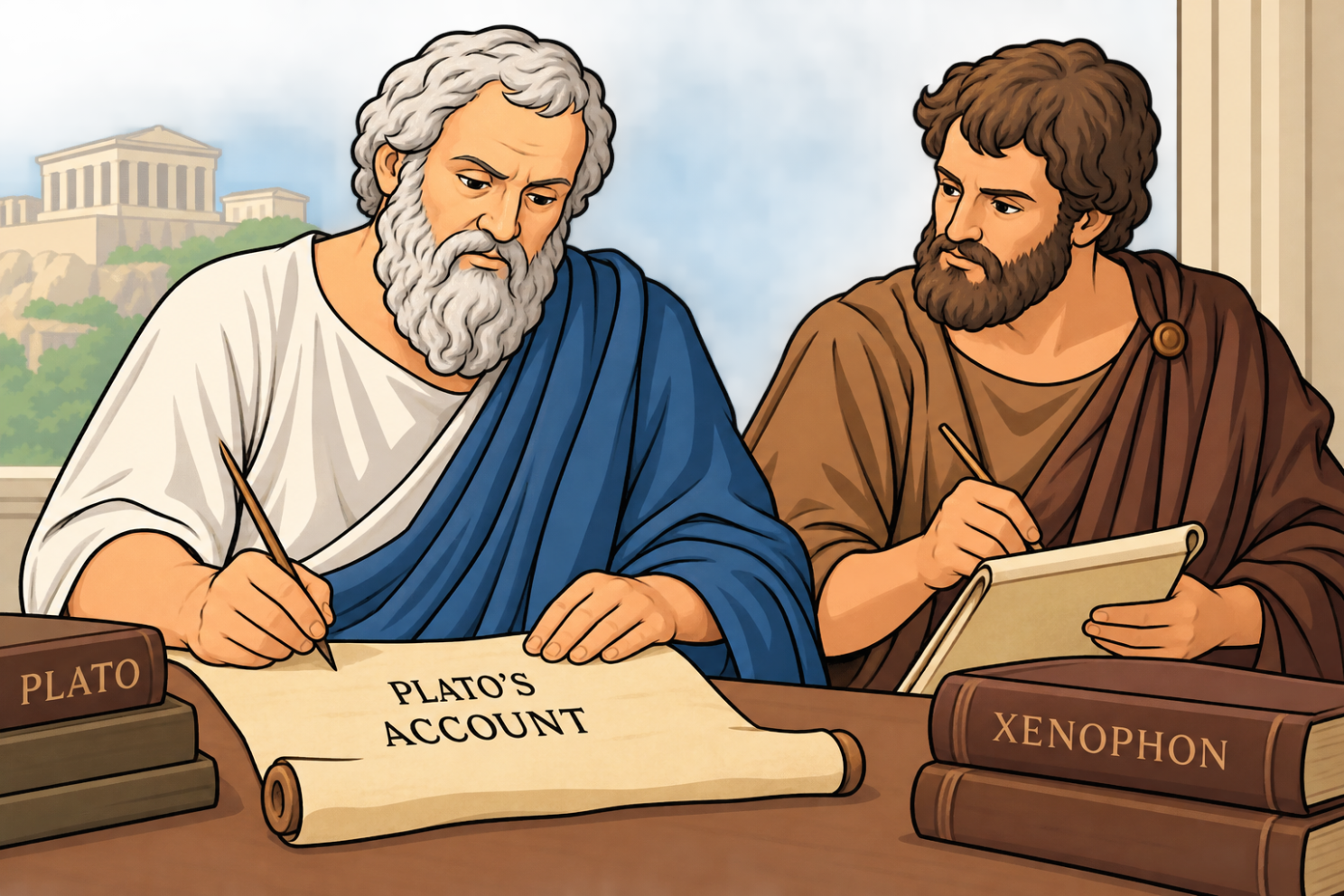
Russell is absolutely right, but leaders, esp of the corporate kind, invariably find it difficult to make the prudent choice: between a loyal reporter who flattens everything, and a brilliant chronicler who improves it in the leader's voice.
Ideally, they need Xenophon and Plato both.
And in rarest of rare cases, both come rolled into the same person who can draft fit for purpose messages depending on the stated purpose and the target audience (and no, we are not talking about AI narratives marked by its pet 'It's not X, It's Y' lines and Em dashes)