November 6, 2026 · 4 min read
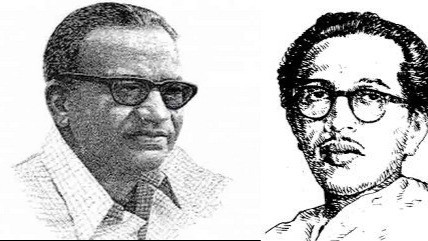
The Twilight Tellers: a tribute to G. A. Kulkarni and C. T. Khanolkar
Some writers light up a room. Others light a single lamp at its edge and show you how much darkness surrounds it. G. A. Kulkarni and C. T. Khanolkar were the second kind.
They were near-contemporaries, born seven years apart. Both came from the western margins of the Marathi world: Kulkarni from the Belgaum-Dharwad borderland, Khanolkar from the coastal villages of the Konkan. Both were private, almost reclusive men who left the noise of literary life to others. Both wrote about the same unanswerable things: fate, loneliness, desire, and the strange forces that move beneath ordinary days.
Marathi literature is richer, stronger, and stranger, thanks to this dynamic duo.
G. A. Kulkarni (1923-1987): storyteller of the shadows
Gurunath Abaji Kulkarni, known to generations of readers simply as G. A., was born in Belgaum in 1923. He spent most of his working life teaching English in Dharwad, far from the literary circles of Pune and Mumbai. He rarely gave interviews, avoided felicitations, and let his stories speak for him.
They spoke. In collections such as Nilasawli, Hirve Rave, Raktachandan, Kajalmaya, Pingalavel and Ramalkhuna, he took the Marathi short story where it had never gone. His characters are travellers, wanderers, failures and seekers, walking into situations shaped by forces they cannot see: chance, inheritance, desire, an indifferent universe. Some stories borrow the shape of myth and parable; others stay rooted in small towns and crumbling family homes.
Kajalmaya won the Sahitya Akademi Award in 1973. Amol Palekar's film Kairi (2001) carried one of his stories to the screen. His letters, collected and published after his death, revealed a mind of wide reading, wit and tenderness behind the famous reticence.
What G. A. gave us was courage: to look at the dark without flinching, and to find in it not despair but a severe beauty. He died in Pune in December 1987.
C T Khanolkar (1930-1976): poet of the inner night
Chintamani Tryambak Khanolkar, better known by his pen name of Aarti Prabhu, was born in 1930 in the Vengurla region of the Konkan coast. He grew up poor, lived through hardship and uncertainty, and later worked in Mumbai, including at All India Radio. Out of that unglamorous life came some of the most haunting poetry in the Marathi language.
His collections Jogva (1959), Diwelagan (1962) and Nakshatranche Dene (1975) are full of twilight, longing, mortality, and a mystic's hunger for something beyond the visible. Nakshatranche Dene won the Sahitya Akademi Award in 1978, two years after his death. Many of his poems found a second life as songs set to music by Hridaynath Mangeshkar, and they are still sung today.
As C. T. Khanolkar he was equally formidable in prose and drama. Novels such as Ratrakala Ghagar Kali, Ajagar, Kondura and Chani explore guilt, sexuality, superstition and the Konkan's mysterious inner life. Kondura became a film by Shyam Benegal; Chani was filmed by V. Shantaram. His plays, including Ek Shunya Bajirao and Avadhya, unsettled Marathi theatre. Khanolkar's Ajab Nyay Vartulacha (1974) based on Bertolt Brecht's The Caucasian Chalk Circle was a sensitive adaptation of Brecht's epic theatre into a Marathi idiom.
Khanolkar died in Mumbai in April 1976, only forty-six. He wrote as if he knew time was scarce.
Read side by side, G. A. and Aarti Prabhu seem to answer each other across the Sahyadris.
- Fate as a living presence. In G. A.'s stories, destiny arrives like a stranger at the door. In Prabhu's poems and novels it hums beneath the surface, like the sea at night. Neither offered easy comfort. Both trusted the reader's intelligence.
- The landscape of the margins. Kulkarni's dusty border towns and decaying wadas; Prabhu's monsoon-soaked Konkan villages. Both made regional places feel universal, even cosmic.
- Solitude. Each was a solitary man, and each wrote solitude from the inside, without self-pity.
- Beauty in the dark. Their work is often called bleak. Unflinching is the better word. Both found grace, music and wonder where most writers look away.
To this day, readers still find their way to a G. A. story late at night and close the book unsettled. Listeners still crave for an Aarti Prabhu poem in a song and feel something they cannot name. Writers, filmmakers and theatre-makers return to both for courage of conviction, which is always in short supply.
These two institutions have taught us how writers from the margins can make a resounding and lasting impact even amid the commotion of motormouth 'celebs' perennially at play in the mainstream.