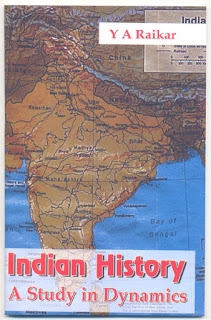
Indian History: A Study in Dynamics by Dr. Y A Raikar
By Sudhir Raikar2 min read
Excerpt from Dr. Raikar's doctoral thesis....
"What is the meaning of Indian History?"
A survey of Indian history from the earliest times would reveal how closely our history follows the pattern laid down by geography, and how the vertical and horizontal developments, blended with the recurrent foreign penetration, go into the making of the personality of India. The Indian sub-continent has been since time immemorial a melting pot of conflicting races and civilizations. The story of Indian culture is one of continuity and conflict, with attempts of reconciliation and synthesis. Challenging forces have often made violent inroads, disturbing its continuity and intensifying the conflict.
Indian history has been a continuous conflict between centrifugal and centripetal forces. The centripetal or the pan-Indian forces represent the horizontal movement of certain cultural traits and operate wherever there exists a strong central power. On the other hand, the centrifugal ones have a tendency to assert themselves during the decay of the central authority. But while doing so, they disturb the vertical unity of the physical and cultural regions.
Under the pressure of invasions - whether the result of population movements or military raids of ambitious generals - the centripetal forces were weakened but the centrifugal ones went into nurturing the regional cultures of India. An immediate fillip was provided to the vernacular languages in the course of evolution and hence we find the growth of language-centric cultures, not race-defined. This aspect is often lost sight of and the whole period is condemned as one of decadence.
------
Dr. Yashvant A Raikar, a field archaeologist, taught and did research at the M S University of Baroda (1965-68). Thereafter, he held responsible positions in the Research Department of the Government of Arunachal Pradesh and traveled extensively along the North East Border. To his credit are: Dynamics of Indian History (Baroda 1960), The Forgotten Khomong (1974), Ita Fort (1976), Archaeology of Arunachal Pradesh (1980) besides several articles and reports. He was awarded Governor's Gold Medal for Meritorious Service in Arunachal Pradesh.
From 1980 to 1986, he was with the Nehru Centre, Mumbai, involved in the Discovery of India Exposition. Post retirement, his main interest was in studying the mysteries, enigmas and elusive aspects of Indian life armed with a holistic historical approach.
Related essays
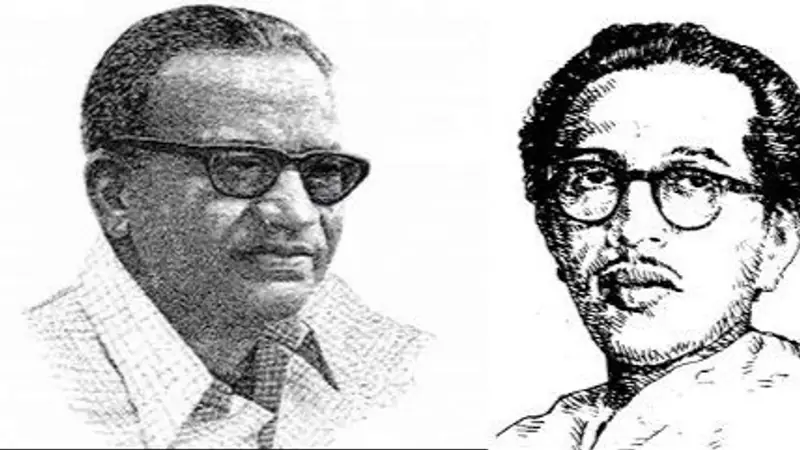
The Twilight Tellers: a tribute to G. A. Kulkarni and C. T. Khanolkar
Some writers light up a room. Others light a single lamp at its edge and show you how much darkness surrounds it. G. A. Kulkarni and C. T. Khanolkar were the second kind.
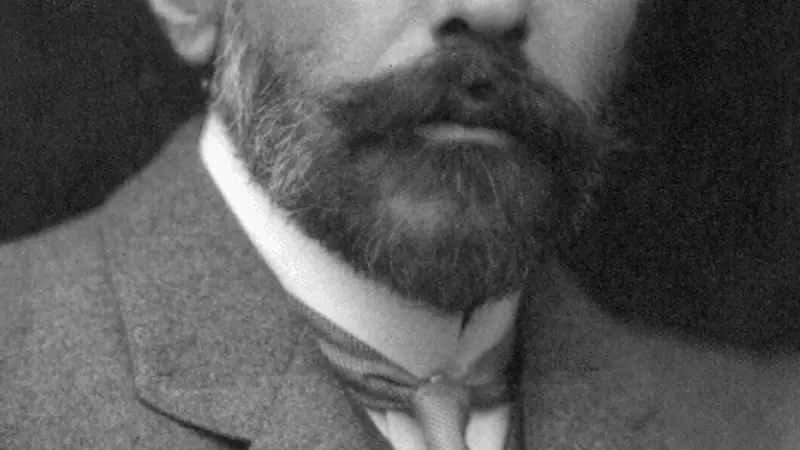
The seafaring litterateur
On Joseph Conrad, the master storyteller from Russian-occupied Poland, and his gift for turning adventure tales into philosophical discourses.
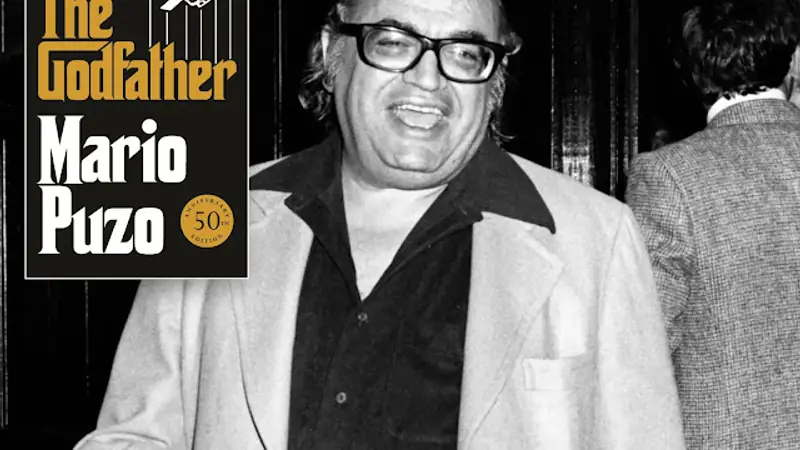
This Pezzonovante won hearts across the globe but Paramount broke his!
A tribute to Mario Puzo, gambler and writer of The Godfather, whose Don Corleone was modelled on his iron-willed mother, and how Paramount hurt him.