Friday, June 10, 2022

Aamar Mrinal Bhuvan Sen


His study of Physics may be a ‘scratch on the surface’ by his own admission, yet he’s one of the very few students worldwide who have fathomed the depth of what the celebrated physicist Niels Bohr said: ‘Confidence comes from not being always right, but from not fearing to be wrong’. 

His filmography, among other things, reveals the endorsed confidence in full measure in telling his stories his own way, unfazed by the lure of adulation or fear of rejection. No wonder, his biggest challenge in filmmaking is self-imposed.


He remarks, “I am committed to my own time. That is my biggest challenge in my filmmaking. Time changes, so do I. So do my content and form. I look upon my life and work as part of the social and political fabric of my own time. I try to capture moments of crisis, moments of truth in the ordinary lives of ordinary people.”

But what about the producers and censor board? No challenge on that front? “I had never had to scout for ‘well-meaning' producers. And throughout my career I played cat and mouse with the stupid diktats of Censor Board. I have seldom accepted censorship of any kind.


Mrinal Sen is known for his unconditional accessibility, a diminishing trait especially among public figures.  Braving the flip side of a congenial dialogue with the common audience, he strikes a dialogue only to speak his mind, never to colour the ensuing interpretation. Ditto for his films. He observes ‘We have made films. Interpretations are yours, the viewer. Are you not a part of the creative process? I think you are.”

But did he face problems with his own interpretations at times? 

His admission is characteristically unqualified. “I’m the first spectator of my own films, I always look upon my films as dress-rehearsals. That’s the reason why I feel like making them all over again. Besides, I need to correct my own conclusions. I ask you to treat my statement as absolutely positive.

Would it be right to call him an activist filmmaker given the non-conformist stance of his films?  He’s invariably played the role of an activist through his films, whether by causing a big dent into romantic notions of poverty, exposing the deep-rooted colonial hangover and feudal mindset even in urban milieus or by taking the establishment by its horns.  

“Who is not an activist in the genuine sense of the term?”, he observes. 

Sen's films are stylized and yet the cause drives them. How does he achieve this blend? 

“Both are intertwined. For me, one doesn’t negate the other.”

Sen shared a brutally honest connect with director Satyajit Ray which the media nauseatingly labelled as a love-hate relationship. But even the level-headed followers of Ray and Sen were intrigued by the long running ‘Statesman’ debate over Sen’s film ‘Akash Kusum’? In hindsight, how does he look at the whole episode? Did both unknowingly go overboard with it or was the extended deliberation much called for?

“I must tell you I do not see the controversy emanating from a love-hate relationship. This was how it began. A review appeared in the city’s leading daily, The Statesman. It was not very positive, but, by no means, negative either. The author of the story wrote a sharp rejoinder. Honestly, I had no reason to instigate him, which was not my business. It was Ray who called me and said he was going to write a short piece without hurting me. That was it. But that set the ball rolling. In his inimitable style, Ray made a sarcastic comment about the author of the story and was obliquely a bit critical about the film too. Though a long-time friend of Ray, the author hit back. And, I too, for no reason enough, joined the fray. A sort of word-play, to start with, dropping names at times like bombs and missiles. And the battle continued. It went on for about two months. About hundred people joined the ‘game’ for and against. We were three to cross swords, the others to comment. All in the columns of The Statesman. It was a wordy battle, signifying not much. Finally, it was nobody’s gain, nobody’s loss either. But the edited version of the controversy involving just three of us featured in the special edition of a book, Les visitors de Cannes in 1992. All beyond my knowledge and belief! Great fun!”

 Ray, Sen and Ghatak comprise the triumvirate which represents the cinematic Renaissance of India. Would it be right to say that Ghatak was largely ignored by the Indian and International media despite making such incisive films on social turmoil and moral anguish? 

“In thoughts, in ideas, Ritwik still remains the same larger-than-life Ghatak, reckless Ghatak, heartless Ghatak, unruly Ghatak, inimitable Ghatak, and, above all, the adorable Ghatak.”, believes Sen.

Does he find the Anurag Kashyap brand of cinema a resurgence of the parallel wave of 70s and 80s, albeit in a new avatar? 

He puts it straight “I am sorry, so far I’ve not come across  any of ‘Anurag Kashyap’ brand of cinema. 

That’s Mrinal Sen for you: a rebel without a pause who thrives on approximation rather than precision, who depicts events in cinema as potent triggers to portray human conflict and complexity, who defies established notions of narrative structures in the process. At 90, he’s still the same. Always being born. And we love him for being so.

Sunday, June 05, 2022

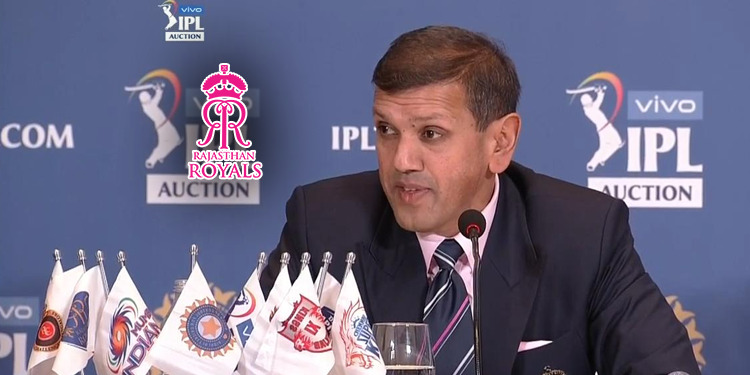
In conversation with Manoj Badale, renowned Venture Capitalist and owner of IPL franchise Rajasthan Royals

IPL 2022: After IPL auction, Rajasthan Royals owner Manoj Badale said |  Dailyindia.net

"People can always find time for charity work if they really want to, and I have learnt as much from charity work as from any other strand of our business activity"

Manoj Badale, 54, hardly needs any introduction. He is the co-founder of the VC firm Blenheim Chalcot, and works as the Chairman of the British Asian Trust. He is also the lead owner of the Rajasthan Royals, the franchise made immortal by leg spin legend Shane Warne. He has also co-authored 'A New Innings', a book on the business of sport.

Having said that, what sets him apart from the rest of the IPL team owners is his delightfully inspiring accessibility, the hallmark of all visionary founders. RR couldn't have asked for a better owner than Manoj and much credit goes to his style of leadership for RR’s impressive run this season, as also the astute picks during auctions. With a visionary owner like him, unassuming maestros like Buttler and Boult, and the timeless icon that Shane Warne is, the team deserved to bag the trophy this season. 

We hope the management will now attend to areas they have been seemingly overlooking all these years. Also, a honest and humble plea to the management: please help Riyan Parag keep his talent above his temperament to save the team from the fatal blows of the contagion effect. 

Unassuming champions like Buttler deserve bigger roles. Talking of Sanju, he is a talented batsman all right; but time and again, he has fallen short of the benchmark that prudent batting and captaincy demand by default. Last but not the least, high time the social media team of RR revisited their notions of wit and wisdom that may run the risk of proving counterproductive at times. 

Here’s wishing them every success next season. 

It took me only a couple of email exchanges to establish a rapport with Manoj. Needless to say, all credit goes to him for quickly absorbing the 'agenda-free' nature of my interest in his life and work, as also my heartfelt suggestion of an freewheeling conversation with him.


Excerpts from the conversation in Q&A format:


Your roots are in Dhule, Maharashtra. Do you retain any memories of the place?  


I left Dhule as a baby. My father was completing a masters at Imperial, and evetually got a job in the UK. My mum, aged 20, speaking no English, joined him and so did I. My sister stayed behind with my grandparents.


Was Economics your favourite subject? What was your childhood dream career? 


I didn’t have any particular career ambitions, but I was, like all good Marwaris, pretty focused on making money! Economics seemed like a good choice to help kick start my ambition rooted in financial wisdom, but little did I know how little it actually teaches you about the ‘real world’!


How and when did you decide to move to the UK? Was it via the path of education or you already had a base there?


As mentioned earlier, it wasn’t my decision, but that of my parents. They, like all Indian parents, made huge sacrifices to provide the best possible education for my sister and I, but we ended up growing up in two different parts of the world, in two different cultures and in two different education systems. She was always more academically gifted, and more disciplined.


Could you share your memories as a student of the University of Cambridge? 


University is a very formative period of any person’s life. You grow up a great deal! Cambridge, and Emmanuel College, was an amazing experience and a very rounded one; whereas now the focus is so much more academic. The most powerful aspect of the learning experience is unquestionably the diversity and quality of your peer group. It was a privilege to be in such enlightened company, and I am still in touch with many of my mates!


How was your career trajectory, in terms of the first job or venture and formative career switches?    


I went into strategy consulting, a decision based on the experience of a peer of mine, as also the career prospects. It seemed like a great place to learn as it provided an astounding diversity of training. I was surrounded by incredible people of strategic acumen including bosses and peers. I was fortunate that Monitor Company was then in the growth phase, which gave me the opportunity to shoulder the highest responsibility very early in life, most significantly the chance to lead the company's strides in India in the year 1995. My first client was Indian Aluminium (Indal), and my wife, Katie, and I lived in Kolkatta, Mumbai and Delhi.


You have a super track record of grooming companies, taking them to scale, and making timely exits - Fluency, Eviivo, Steeltrace, Rights... 


I have been very fortunate to strike up a good business partnership with Charles Mindenhall on the strong foundation of our complementary skills. I am not sure that we set about to be tech entrepreneurs, but 1998 was a fortunate time to start building internet-related companies. Timing is always important, and we have learnt and developed our own ‘venture building’ playbook over time. We haven’t changed much about what we do; it is just that the scale of many of these companies has swelled over time. With 4,000 people and 20 companies, we have a supple and scalable platform, and we continue to incubate and build new technology businesses.


How you do tread the different roles at Blenheim Chalcot,  Emerging Media, The British Asian Trust,  Prince’s Charities Events Ltd and  Operation Smile UK.?


Charles and I have both been active with our respective charities for many years. The reality is that our ‘venture building’ skills are highly relevant to ‘charity building’ and it has been a privilege to get the chance to work with some of the best philanthropists in the world. People can always find time for charity work if they really want to, and I have learnt as much from charity work as from any other strand of our business activity.


How and when did you decide to acquire an IPL team? How has been the experience till date?  


We had been investing in cricket since 2006 – acquiring the commercial rights to Leicestershire, launching the televised talent hunt 'Cricket Star', and staging the first Champions League of 2020. All of these ventures were far from success stories, but they helped us build  relationships with key people at the BCCI. When the league was launched, we were invited to bid for a franchise, which we did after careful due diligence. It has been a fascinating roller coaster of a journey, with umpteen ‘highs’ and ‘lows’, but the learning has been immense. I am deeply involved and emotionally invested in the franchise, and we are also building an outstanding management team.


Despite your multiple interests, you seem to maintain a rather low profile by choice. How would you describe yourself as a person and a professional?


I don’t think you can make specific choices about your profile, and as a lead owner of an IPL team, it is impossible to avoid media exposure! We are always keen to promote the profile of our businesses, rather than the people that lead them. How I would describe me? Ambitious, and still learning new things every day.


What are the key plans and aspirations going forward?


It would be nice if our businesses fulfilled their potential. And it would be nice to win another IPL trophy!


Your hobbies, pastimes and passion areas...


With three kids, a busy work life and an equally busy social life, there isn’t much time for pastimes, although golfing and skiing are probably the two favourites. 


Featured Post

Dr. Vasantrao Deshpande - The Renessiance Man of Indian Music

To gauge the absolute purity of Dr. Vasantrao Deshpande's soul, timeless beauty of his renditions, or the  multi-hued aspects of his per...